
Ford Wildlife Foundation Vehicles Enable Ecological Research
The Ford Wildlife Foundation (FWF), supported by UKZN Foundation, has continued its vital support of research in the School of Life Sciences (SLS) at UKZN by providing two new loan research vehicles to enable researchers and postgraduate students to expand the body of knowledge on important fish, avian, mammal and herp species in South Africa.
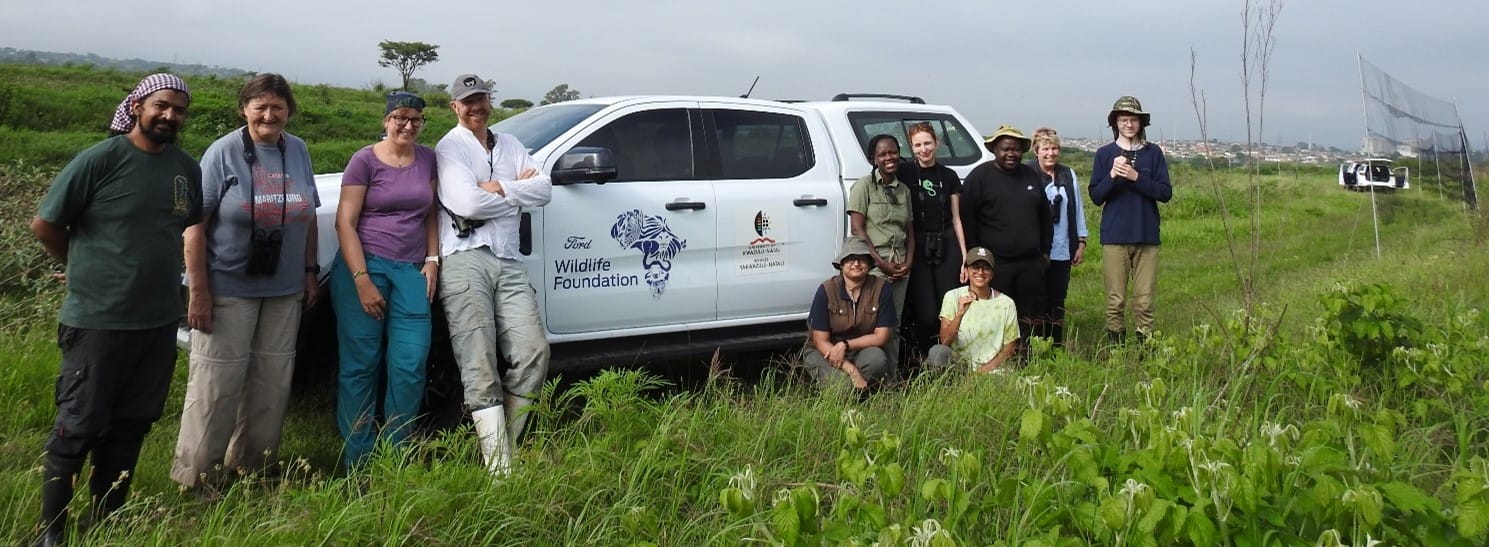
With the arrival of two new Ford Ranger vehicles – joining the older Ford models previously acquired through the National Research Foundation (NRF) South African Research Chair (SARChI) in Ecosystem Health and Biodiversity in KwaZulu-Natal and the Eastern Cape – Professor Colleen Downs and her students received hands-on training on operating the new vehicles and optimising their use in the field. This was hosted by Mr Wade Pope of Pope’s Motors in Richmond, with Mr James Wood also sharing valuable insights on vehicle handling and driving through rugged terrain.
Downs expressed gratitude to the FWF and Ford dealerships for the two new loan research vehicles and their continued support of her team’s research. ‘Much of our research is done in the field rather than the lab and would not be possible without your support,’ said Downs.
Since 2017, the Ford Wildlife Foundation has provided multiple vehicles to UKZN, reinforcing its commitment to environmental conservation in South Africa. These contributions have allowed researchers to collect critical biological data, expand their conservation efforts and educate future scientists.
Notable projects supported by the FWF through the loan of these vehicles include studies on river health led by Dr Matthew Burnett, Principal Scientist at the Institute of Natural Resources and an Honorary Researcher with UKZN’s SLS, in collaboration with Downs. His research focuses on river connectivity and restoration, inland fisheries, river monitoring, fish telemetry and the presence of antibiotic-resistant microbes using Environmental DNA (eDNA) techniques.
Burnett’s work highlights the importance of freshwater ecosystems in sustaining livelihoods, particularly for rural communities. His research assesses the impact of non-native species, ecotoxicology, and fish conservation, while also promoting educational initiatives on water resource management. A recent study by his team documented a significant fish kill event on the Msunduzi River, demonstrating the urgent need for better policy alignment and environmental protection measures.
Burnett emphasised that freshwater ecosystems serve as vital indicators of sustainability, directly impacting human health and well-being. However, their preservation requires dedicated stewardship. Currently, several postgraduate students from the Downs Lab are actively engaged in research to support conservation efforts across KwaZulu-Natal.
PhD candidates Mr Lwandile Ngozi and Mr Ntandokayise Makhathini, along with master’s candidates Mr Zain Armien and Ms Lungile Mampura, are conducting studies on macroinvertebrates, fish populations and water quality. Their work plays a crucial role in safeguarding these ecosystems for both humans and wildlife. PhD candidate Mr Jonah Gula has also been ringing and tracking waterbird species, gathering valuable data on their movement patterns in response to shifting water conditions.
The FWF’s vehicle support has also been instrumental in UKZN’s research on hippos, birds and terrestrial vertebrates. Since 2015, the SLS has investigated hippo behaviour and ecology to better understand their role in aquatic and terrestrial systems. With FWF’s provision of Ford Ranger 4×4 vehicles, researchers have conducted surveys on hippo movements, habitat use and the impact of climate change on their populations. The research has also contributed to mitigating human-hippo conflict and conserving wetland ecosystems.
UKZN’s research on vultures has similarly benefitted from FWF’s contributions. Vultures play a crucial ecological role but face severe population decline due to habitat loss and poisoning. With the Ford Rangers, researchers have been able to access remote areas to monitor vulture populations, assess land-use impacts and implement conservation strategies.
The ability to travel to diverse and often inaccessible locations has significantly enhanced UKZN’s field research capabilities. The Ford Rangers have enabled postgraduate students to develop essential field skills, facilitating hands-on conservation work.
PhD candidates Mr Euan Genevier and Ms Kirsty Kyle and an honorary researcher at UKZN Dr Cormac Price use FWF-supported vehicles to study the urban and rural ecology of several reptiles, including Nile monitors, southern African pythons, black mambas and Mozambique spitting cobras in Durban and elsewhere in KwaZulu-Natal. Their research examines how these reptiles adapt to urban environments, with findings contributing to better wildlife management and public awareness efforts.
Lynda du Plessis, manager of the FWF, emphasised the foundation’s mission to support both research and education.
‘These UKZN projects are vital to FWF’s mission because they not only conduct essential research on various species to enhance conservation efforts but also provide educational opportunities for students pursuing MSc and PhD qualifications. FWF is making a meaningful, long-term impact on wildlife preservation and community well-being by contributing to academic growth and species conservation,’ said du Plessis.
Article By: Christine Cuénod