


MerSETA Funds Practical Training and Bursaries for UKZN Mechanical Engineering Students
The University of KwaZulu-Natal (UKZN) is set to strengthen the practical capabilities of its Mechanical Engineering students thanks to generous support from the Manufacturing, Engineering and Related Services Sector Education and Training Authority (merSETA). As one of 21 Sector Education and Training Authorities (SETAs) established by the South African government, merSETA plays a crucial role in promoting skills development across the country’s manufacturing and engineering industries.
MerSETA has made significant funding available to support both academic bursaries and a hands-on training initiative through this latest partnership with UKZN. The funding will benefit undergraduate students in the School of Engineering, with a particular focus on empowering those from financially disadvantaged backgrounds.
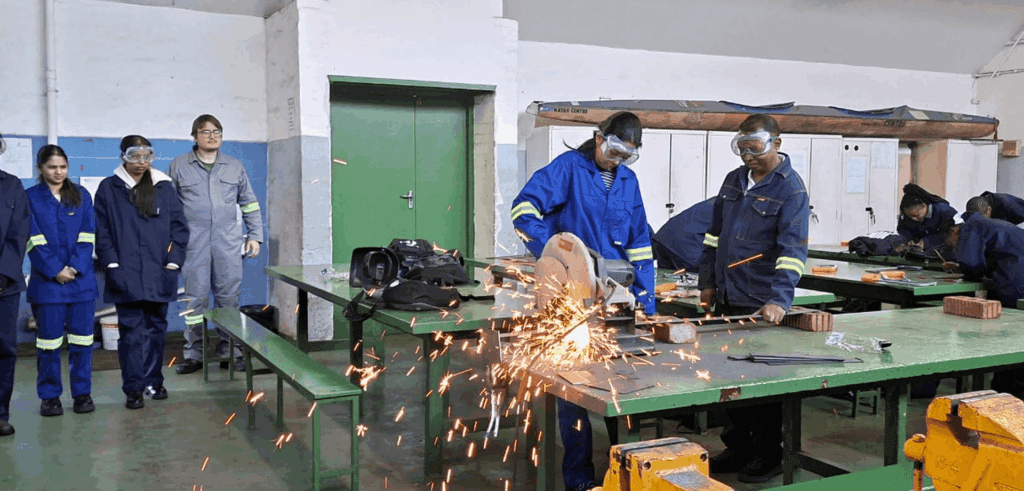
Mechanical Engineering students will have the opportunity to gain structured practical experience during their mid-year break. The workshop training programme is designed to complement the rigorous academic curriculum by immersing students in real-world applications of mechanical engineering principles.
The two week-long practical sessions will be held at the George Campbell School of Technology in Durban. Students will be introduced to a range of essential mechanical tools and equipment, including metal lathes, drill presses, milling machines and welding stations. Students will learn how to safely operate machinery, use hand tools and apply core manufacturing techniques under the supervision of experienced technicians and trained teachers.
Professor Glen Snedden, Academic Leader for Mechanical Engineering at UKZN, expressed appreciation for merSETA’s forward-thinking support. ‘We’re incredibly grateful to merSETA for backing this initiative,’ he said. ‘It’s vital that our students graduate not only with strong theoretical foundations, but also with the practical skills and confidence needed to thrive as professional mechanical engineers. This programme bridges the gap between the lecture theatre and the workplace – and represents a critical competence for any engineer entering industry to appreciate the implications of their design choices.’
‘Local industry had raised the need for an improvement in this area and it is through their support that this initiative has seen success. The renewed relationship with local industry, and in particular the Metair Group and Toyota, follows last year’s full accreditation of the Engineering programmes available at UKZN. It shows that its graduates are just as capable, skilled and relevant to the industry as they were when the programme started 100 years ago, and the School of Engineering is determined to ensure that it continues to innovate and adapt the academic programme to remain so.’
The initiative is also a direct response to the skills shortage in South Africa’s engineering sector, where graduates often face challenges transitioning from academic study to workplace readiness. The School of Engineering has also received a donation of personal protective equipment (PPE) for some of the students from the Beier Group. UKZN aims to boost employability, workplace integration and long-term career success by equipping students with hands-on experience early in their studies.