


Page 25 - Demo
P. 25
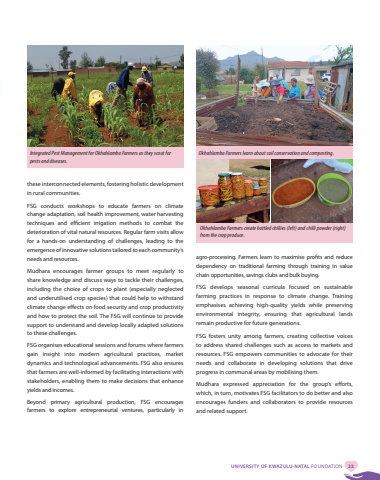
these interconnected elements, fostering holistic development in rural communities.FSG conducts workshops to educate farmers on climate change adaptation, soil health improvement, water harvesting techniques and efficient irrigation methods to combat the deterioration of vital natural resources. Regular farm visits allow for a hands-on understanding of challenges, leading to the emergence of innovative solutions tailored to each community%u2019s needs and resources. Mudhara encourages farmer groups to meet regularly to share knowledge and discuss ways to tackle their challenges, including the choice of crops to plant (especially neglected and underutilised crop species) that could help to withstand climate change effects on food security and crop productivity and how to protect the soil. The FSG will continue to provide support to understand and develop locally adapted solutions to these challenges.FSG organises educational sessions and forums where farmers gain insight into modern agricultural practices, market dynamics and technological advancements. FSG also ensures that farmers are well-informed by facilitating interactions with stakeholders, enabling them to make decisions that enhance yields and incomes. Beyond primary agricultural production, FSG encourages farmers to explore entrepreneurial ventures, particularly in Integrated Pest Management for Okhahlamba Farmers as they scout for pests and diseases. Okhahlamba Farmers learn about soil conservation and composting. Okhahlamba Farmers create bottled chillies (left) and chilli powder (right) from the crop produce. agro-processing. Farmers learn to maximise profits and reduce dependency on traditional farming through training in value chain opportunities, savings clubs and bulk buying. FSG develops seasonal curricula focused on sustainable farming practices in response to climate change. Training emphasises achieving high-quality yields while preserving environmental integrity, ensuring that agricultural lands remain productive for future generations. FSG fosters unity among farmers, creating collective voices to address shared challenges such as access to markets and resources. FSG empowers communities to advocate for their needs and collaborate in developing solutions that drive progress in communal areas by mobilising them. Mudhara expressed appreciation for the group%u2019s efforts, which, in turn, motivates FSG facilitators to do better and also encourages funders and collaborators to provide resources and related support. UNIVERSITY OF KWAZULU-NATAL FOUNDATION 23


