
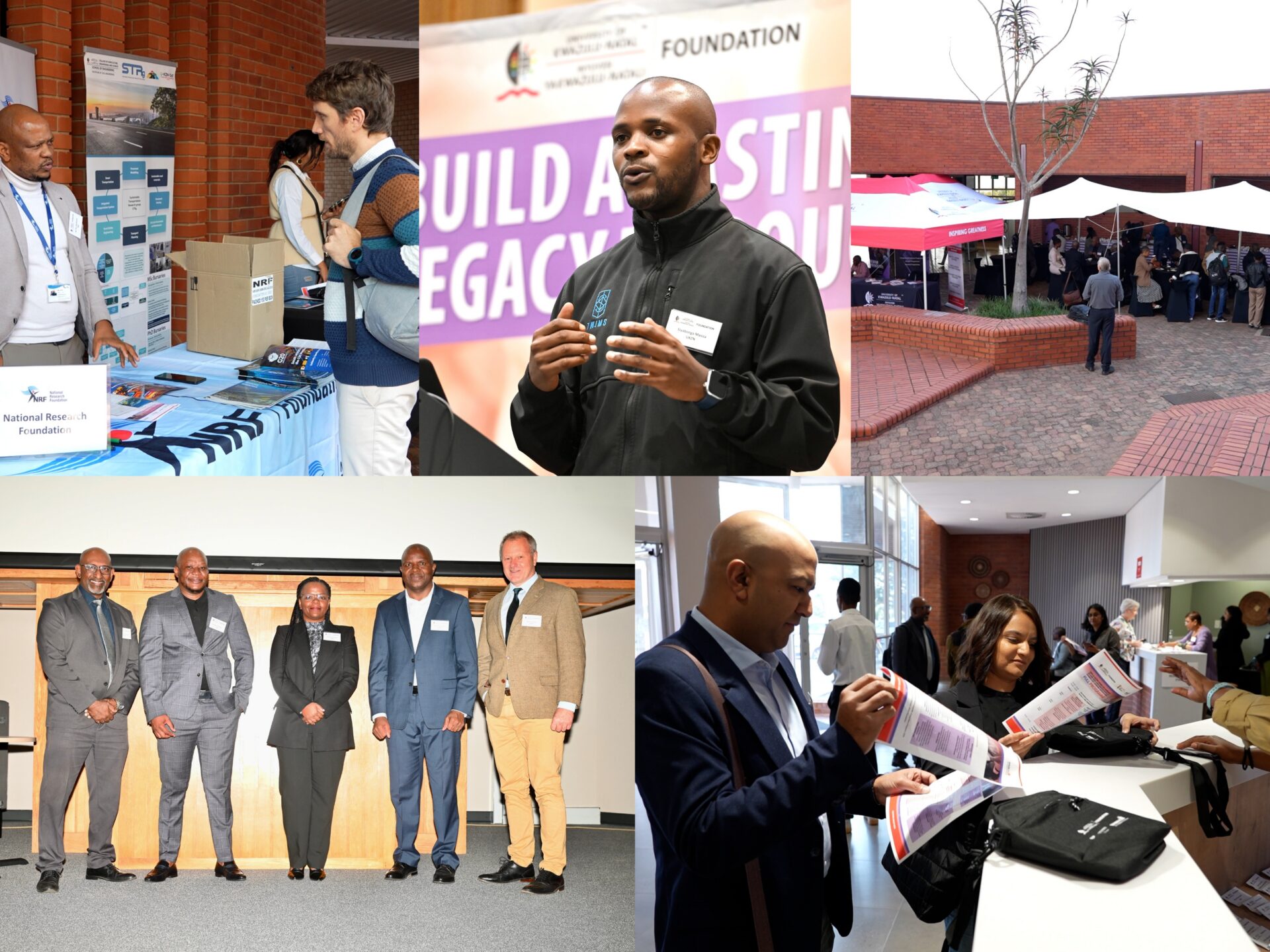
The University of KwaZulu-Natal (UKZN) Foundation recently partnered with the Department of Science, Technology and Innovation (DSTI) to host Spark KZN, a conference designed to strengthen collaboration between academia, industry and government.
The conference also highlighted opportunities available through South Africa’s Research and Development (R&D) Tax Incentive.
Held at the UKZN Graduate School of Business and Leadership, the event brought together researchers, business leaders, innovation specialists and policymakers to explore how partnerships can accelerate technological advancement, drive economic growth and address some of South Africa’s most pressing challenges.
Central to the conference was the DSTI Section 11D R&D Tax Incentive, a government initiative that allows companies to claim a 150% tax deduction on qualifying research and development expenditure. The incentive encourages investment in innovation while creating opportunities for collaboration with universities and research institutions.
Opening the event, Executive Director of the UKZN Foundation, Mr Steve Camp, highlighted the importance of strengthening ties between researchers and industry.
Said Camp: “Innovation does not happen in isolation. Spark KZN creates a platform where researchers, business leaders and government can come together to identify opportunities, solve real-world challenges and transform ideas into practical solutions. Through these partnerships, we can unlock investment in research that delivers meaningful impact for society and contributes to South Africa’s economic development.”
The conference provided delegates with a practical understanding of how the R&D Tax Incentive works, the types of activities that qualify, and the benefits available to businesses investing in research and innovation. Participants also learned how working with universities can provide access to specialised expertise, research infrastructure and innovative thinking.
Camp noted that universities played a critical role in South Africa’s innovation ecosystem.
“As one of South Africa’s leading research-intensive universities, UKZN conducts research across a broad spectrum of disciplines, including food security, climate resilience, public health, pharmaceutical development, digital technologies, economic growth and social transformation, he said.”
The University’s diverse research portfolio was showcased throughout the conference, with presentations highlighting projects that have strong potential for industry investment and commercial partnerships.
Among the innovations presented were advanced nanomaterials for water purification, artificial intelligence applications for next-generation telecommunications networks, renewable energy technologies, climate-smart agricultural solutions, digital health innovations, and groundbreaking tuberculosis diagnostic and vaccine research. These projects demonstrated the opportunities available to organisations seeking research-driven solutions to complex challenges.
For Professor Gina Rencken, one of the UKZN researchers presenting at the conference, the event represented an important opportunity to connect academic research with real-world impact.
“This is a really exciting opportunity to merge research and industry partnerships and explore how we can scale research outcomes to reach the broader public and the people who need them most,” said Rencken.
A recurring theme throughout the conference was the importance of translating research into practical applications. While universities generate new knowledge and technological advances, industry partners play a vital role in bringing these discoveries to market through products, services and systems that create value.
Delegates also explored how university-industry partnerships work in practice. They heard that researchers contribute scientific and technological expertise through activities such as laboratory testing, data analysis, prototyping and innovation development, while industry partners provide funding, market insight and pathways to implementation. In return, businesses gain access to cutting-edge research and tax incentives, while universities benefit from industry-linked research opportunities, student development and knowledge transfer.
Representatives from local government highlighted the value of these partnerships. Deputy Head of eThekwini Municipality’s Electricity and Energy’s Management Directorate, Mr Veer Ramnarain, emphasised the role universities can play in addressing service delivery and development challenges.
“We don’t just want to receive a product; we want to be part of the solution. By partnering with the University and its students, we can work together to address real challenges facing municipalities,” he said.
The conference also underscored the strategic importance of innovation across sectors driving KwaZulu-Natal’s development, including agriculture and food security, data science and computing, green energy, financial services, pharmaceuticals, education and public policy. By fostering collaboration in these areas, Spark KZN aims to stimulate research-led solutions that support sustainable growth and job creation.
The importance of building stronger relationships between academia and industry was echoed by Senior Engineer at the National Transmission Company South Africa, Mr Sylvester Mhlongo. “Conferences like this help build relationships between universities and industry. They create opportunities for engagement and collaboration on research projects that might otherwise never happen,” Mhlongo said.
Presentations from UKZN and DSTI leaders further reinforced the value of partnership-driven innovation. Delegates heard from UKZN’s Director of Innovation and Entrepreneurship Dr Nqobile Gumede, who outlined the University’s research strengths and innovation ecosystem. Executive Director and Dean of the Graduate School of Business and Leadership, Professor Serestina Viriri, highlighted the importance of leadership in fostering innovation, while Deputy Director at the DSTI Dr Pholoshi Maake, provided a detailed overview of the R&D Tax Incentive and its benefits for industry.
Among the industry representatives attending the conference was Regional Manager at AfriSam, Mr Achmat Khan, who said the diversity of research showcased during the event highlighted numerous opportunities for future collaboration. “What stood out for me was the diversity of research being undertaken. We can see significant potential for future projects, particularly through collaboration with postgraduate researchers and innovators,” he said.
Khan added that the presentation on the R&D Tax Incentive was particularly valuable for businesses seeking to invest in innovation. “Many companies are not aware of the incentive. It’s not just about investing in research; it’s about creating innovation while also receiving meaningful returns,” he said.
The next Spark KZN Conference will be held in 2027.
For more information about the conference, visit https://foundation.ukzn.ac.za/dsti-spark-kzn-workshop/
Name of author: Melissa Mungroo mungroo@ukzn.ac.za
Photographer: Albert Hirasen Hirasena@ukzn.ac.za